The Four Types of SEO: A Practical Guide for Singapore Businesses
Though SEO is often considered to be just one form of marketing practice, an effective SEO campaign should involve multiple elements. Even if the site is optimised from a technical standpoint, its content may fail to do well if it does not have authority and local significance.
For Singapore businesses, understanding the different types of SEO can make it easier to identify weaknesses, allocate resources, and build a search strategy that supports long-term growth.
What Are the Types of SEO?
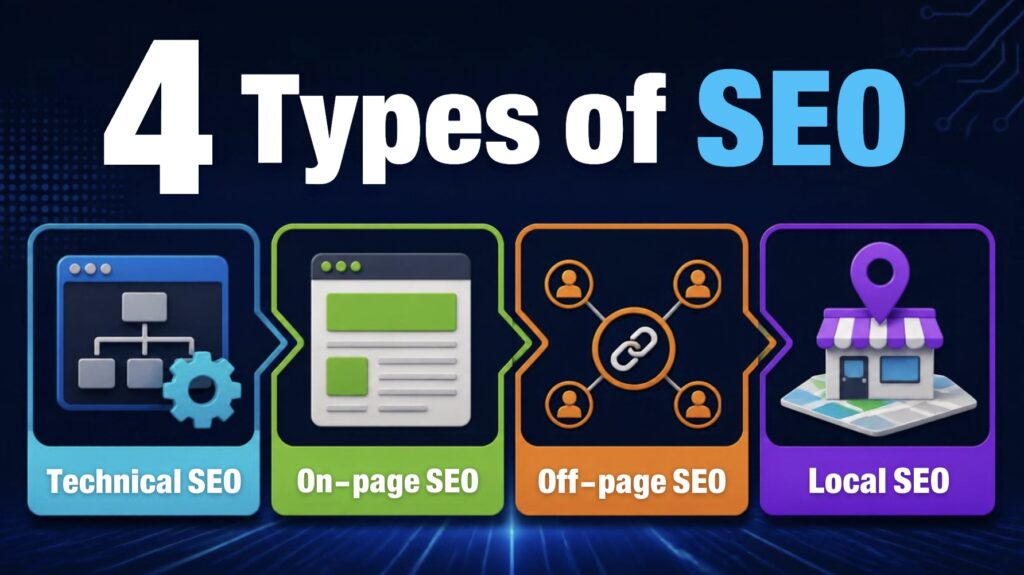
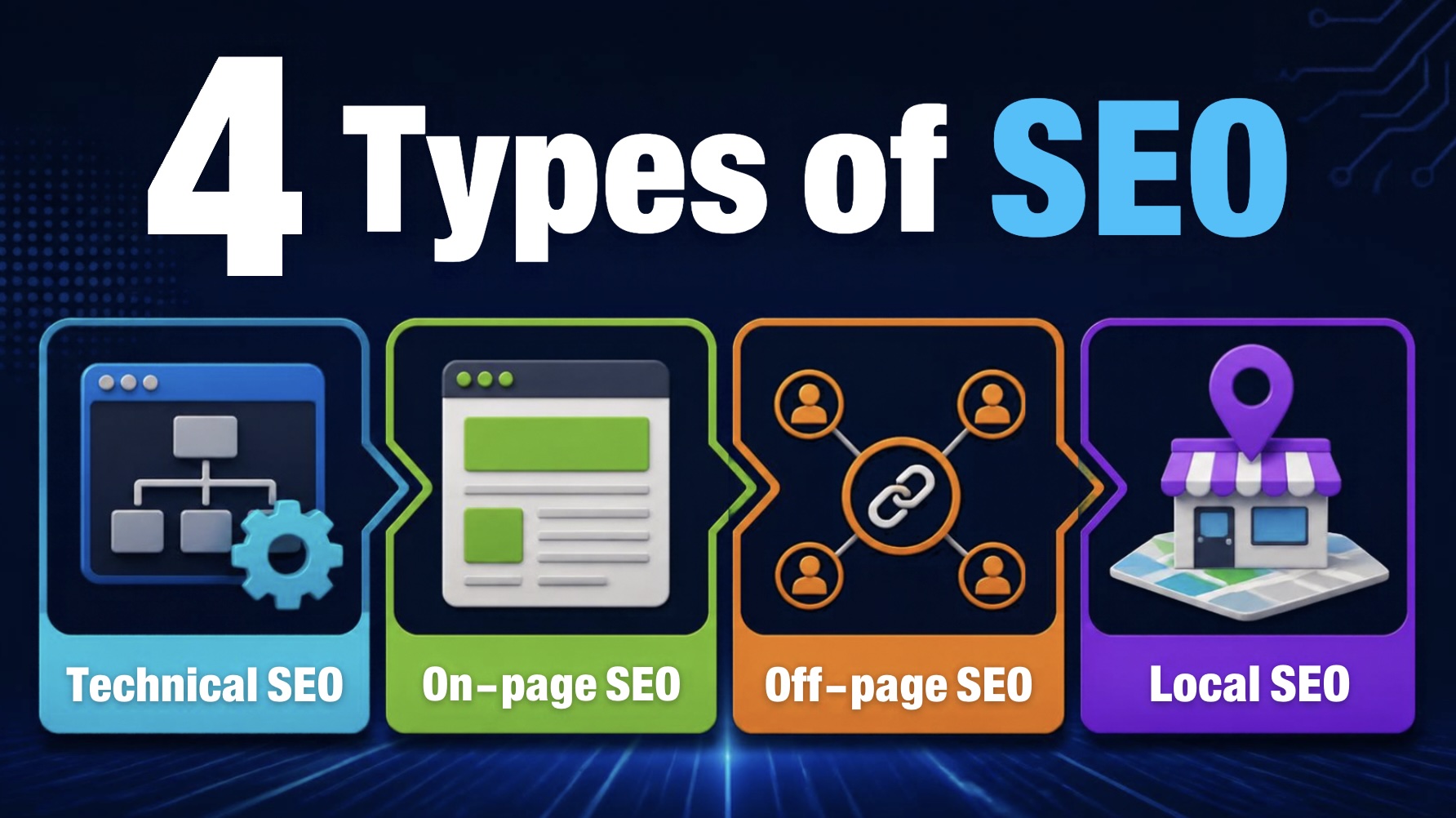
There are four main types of SEO: technical SEO, on-page SEO, off-page SEO, and local SEO. They all cover various aspects of search visibility, but they do not operate completely independently.
Even if the business has enough local visibility, it could be losing potential clients because of poor website performance. Likewise, a highly informative website can lack competitiveness if it has no authority and is unable to demonstrate its relevance.
Therefore, learning how they all interconnect will be more useful than considering them as distinct marketing practices.
Technical SEO
Technical SEO focuses on the technical factors which ensure that search engines can crawl, read and index websites. Technical SEO encompasses aspects such as site architecture, site speed, mobile optimisation, indexing, internal links, structured data, redirects and website security. A technically optimised website makes it easier for search engines to find and read through its content while offering users a good experience at the same time.
On-Page SEO
On-page SEO is based on the content and various aspects appearing on individual webpages. It includes aspects such as title tags, headings, page content, URLS, internal links, images and keywords. An effective on-page SEO starts with search intent. Instead of keyword stuffing, companies need to create pages that answer the needs and queries of the audience.
For example, for a Singapore-based company, this could mean creating detailed, informative pages about services or products in order to satisfy the search needs of potential clients.
Off-Page SEO
Off-Page SEO focuses on the signals which help in gaining the authority of a website outside of its own pages. Link Building is one of the best-known practices in Off-Page SEO, but what is really important is not just link building but getting relevant and credible recognition.
There are other ways of recognition such as industry mentions, digital PR, partnerships, expert contributions, etc., which can help in building up the authority of a business on the internet. In the case of Singapore-based businesses operating in the search market, getting relevant and credible recognition can help in gaining credibility.
Local SEO
Local SEO entails optimising for searches related to a particular geographical location. This is more useful if Singapore-based businesses target a local audience. Local SEO helps in getting potential customers to find relevant businesses, learn about their locations and evaluate the services provided by them.
Accurate business information, a well-maintained Google Business Profile, customer reviews, relevant location content, and consistent business details all contribute to a stronger local presence.
How the Four Types Work Together
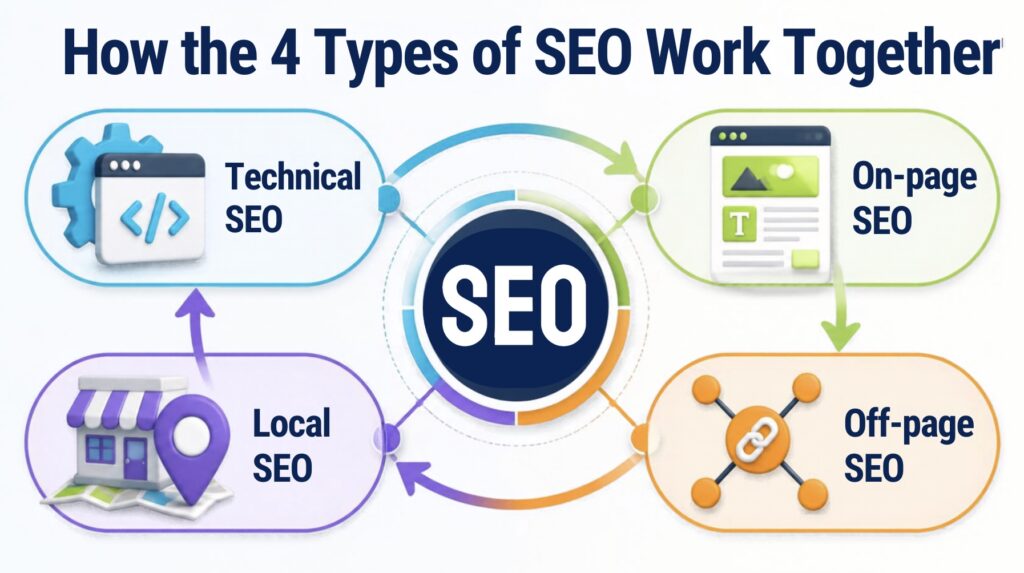
The above four areas are not distinct strategies where a business needs to make a choice among. These strategies are complementary. Technical SEO works to help search engines crawl the website. On-page SEO makes the website content relevant.
Off-page SEO works to create authority, and local SEO works to increase visibility on location-based searches. All these components come together in an SEO strategy, which emphasises each of them based on business objectives and weaknesses.
Which Type of SEO Should a Business Prioritise?
There is no set-in-stone beginning point. A company facing technical challenges needs to fix these problems before allocating significant resources into creating fresh content. A website without technical issues but with poor content would benefit from working on improving the current pages.
A company that already has good onsite content but low local presence needs to work on its local presence. The first step in practice is to conduct an audit of the site and see what needs fixing to make an impact on visibility and conversions.
Businesses can then prioritise improvements based on:
- Technical impact
- Search demand
- Business relevance
- Competition
- Existing website performance
- Available resources
This approach prevents businesses from spending time on SEO activities simply because they are popular.
Common SEO Mistakes to Avoid
Businesses can undermine otherwise good SEO strategies by focusing on individual tactics instead of the bigger picture.
- Making Content Irrespective of Search Intent: A page may target the right keyword but fail to meet the needs of the searchers. Content should address the purpose behind the query rather than simply repeat a phrase.
- Falling in the Trap of Quantity Over Quality: Businesses need to get as many backlinks as possible. However, businesses should aim for quality, relevant, credible and relationship-building links.
- Technical SEO Errors: Speed issues, broken links, bad user experience on mobile, and indexing issues can have negative impacts on the performance of even good content.
- Overlooking Local SEO: Businesses serving customers from Singapore cannot afford to overlook the power of local signals. Accurate business information, reviews, relevance and presence locally can all contribute to visibility.
How Is AI Changing the SEO Landscape?
AI is changing how people discover information; it does not remove the need for the fundamentals of SEO. The search engines will still need to make sense of the webpage, topic, business and connections between the pieces of information. Site architecture, valuable content, topical relevancy, and credibility continue to be essential.
The use of AI has also led to another reason to go past shallow content that relies on keywords. Companies should come up with resources which showcase their expertise in answering the audience’s questions.
AI SEO should not be seen as a totally different thing compared to traditional SEO. It is one part of the evolution of SEO, where the fundamentals apply: make information accessible, relevant, and credible.
Building a Complete SEO Strategy
SEO types like technical SEO, on-page SEO, off-page SEO, and local SEO should not be pitted against one another. Rather, they should complement each other as part of the overall strategy.
For example, a company in Singapore may start by fixing technical problems, optimising its key commercial pages, building its authority in the particular market segment, and gaining visibility in the local context. This may evolve as the company itself evolves.
The right strategy isn’t a checklist where you tick off all four types of SEO once and consider them done forever.