Condo Interior Design in Singapore: How Designers Solve Space, Storage, and Style
You know that moment. You’re standing in the middle of your new condos’ empty living area, the one that looked so spacious in the brochure. And suddenly it feels… smaller. The blank walls seem to close in. Your phone buzzes with a Pinterest explosion of perfect, seemingly unattainable styles.
You’re probably not here for another trend list or a sales pitch, but to understand how professionals actually approach condo interior design when space, storage, and light are limited.
What does “condo interior design” really mean in Singapore today?
In Singapore today, condo interior design usually means doing more with less. Less usable space than the brochure suggests fewer structural changes than homeowners expect, and regulations that quietly shape almost every decision.
Developer layouts are often fixed, MCST rules limit what can be hacked, and storage always runs out faster than expected. We see this alot in family condos: enough space on paper, but nowhere to put daily clutter.
How do you design a condo when space is limited but expectations are high?
Practical condo interior design relies on how you move through the home, not with measurements.
Start by mapping daily routines—where shoes pile up, how often the dining table is used, whether work-from-home is permanent. This is why designers often challenge the original developer layout. Because what works neatly on plan can quietly frustrate daily life once you’ve moved in.
In smaller condos, walls take more than space—they take light. Instead, zoning is done visually. Changes in flooring, ceiling lines, or lighting help separate living, dining, and kitchen areas while keeping the home open and breathable.
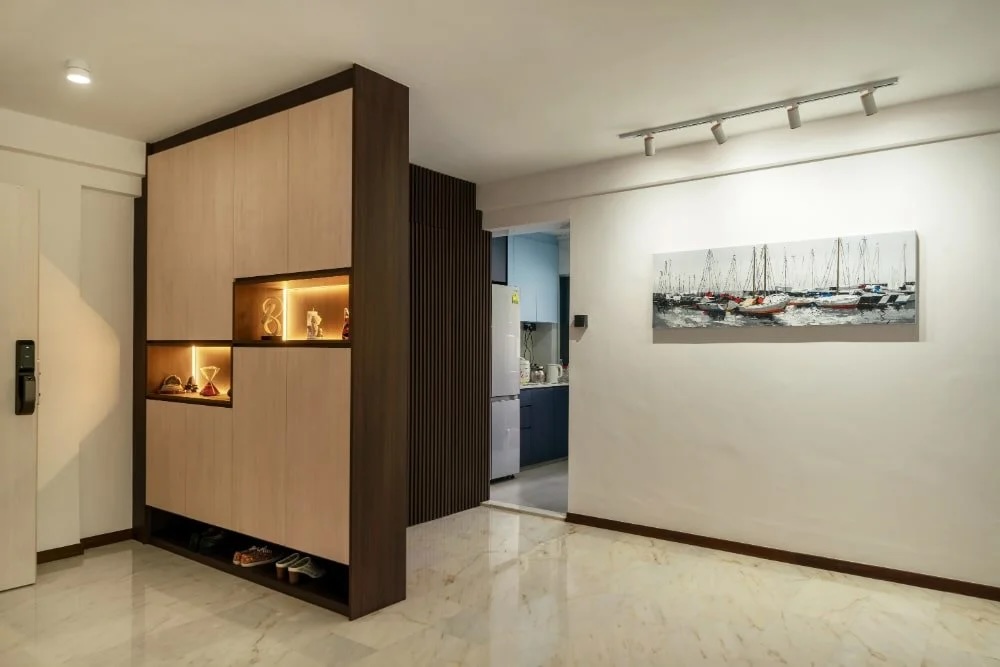
Full-height carpentry, recessed cabinets, and vertical shelving take advantage of space most homeowners don’t think about until storage starts running out. But remember that too many colours and materials shrink a space visually.
A study nook that converts to a guest space, or storage that adapts as needs change, keeps the home relevant for years.
What design trends actually work well in Singapore condos (and which don’t)?
A useful way to filter design trends is to ask a less glamorous question:
Will this make daily condo living easier or quietly harder over time?
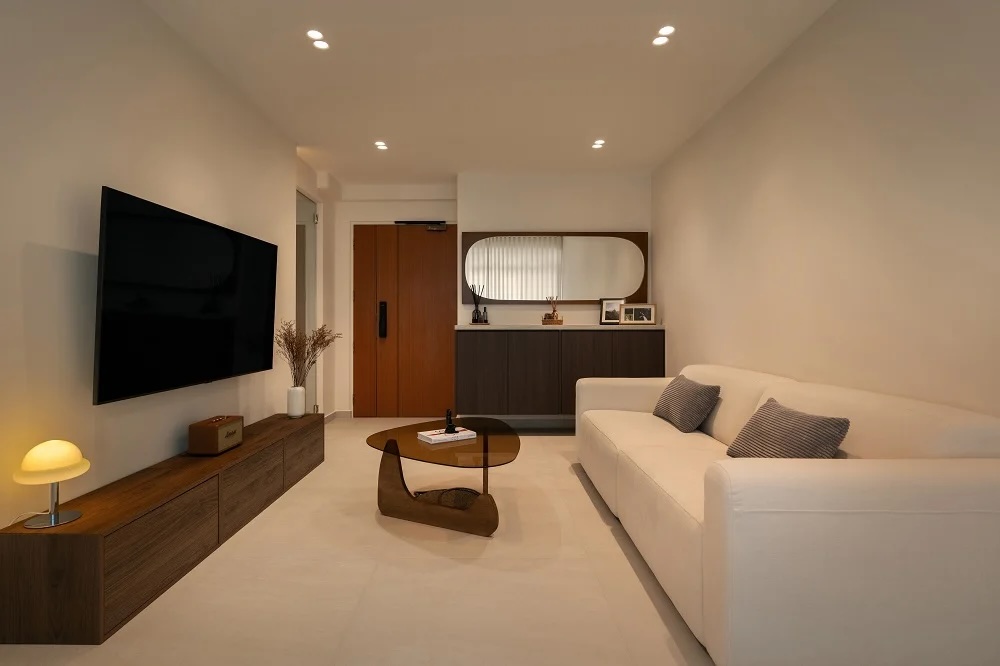
The trends that last in Singapore condos are the ones that quietly solve space, light, and lifestyle issues—without shouting for attention. Scandinavian and minimalist styles tend to work well in condos because they prioritise light, storage, and clean lines.
A Scandinavian-inspired project is a good example of how this plays out in real life:
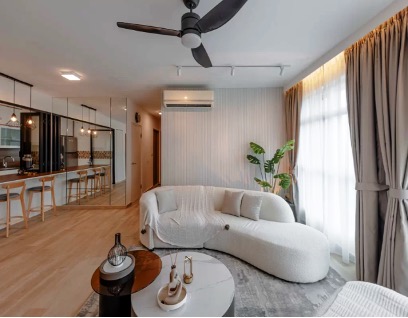
The living area feels calm and generous, with soft earthy tones, full-height carpentry, and even furniture integrated into the storage. And kitchen is fully functional for daily cooking, while features like retractable beds quietly add flexibility.
Luxury and bold statements — when they work, and when they overwhelm
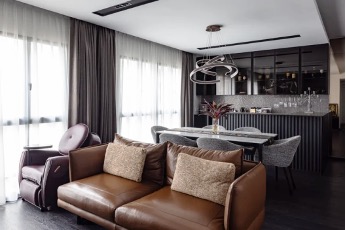
Luxury trends — dark palettes, marble feature walls, metallic accents — can work in condos. But they’re also where things most often go wrong without restraint.
In a bold transformation, dramatic marble textures, gold tones, and sculptural lighting are balanced by clean lines and controlled colour blocks. It feels glamorous, not heavy. This luxurious condo shows how statement pieces should anchor a space, not crowd it.
The living area is rich with texture: polished marble, soft furnishings, and art-like lighting that add drama without visual chaos. Every bold choice has breathing room.
Smart home integration in condos — functional upgrade or gimmick?
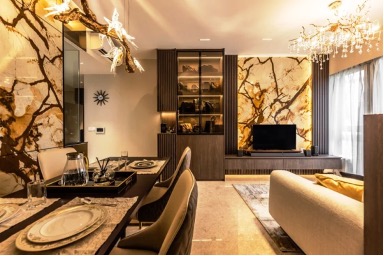
Smart lighting scenes, automated curtains, and climate control work best when they’re invisible. If tech draws attention to itself, it’s usually poorly planned. In well-planned condo homes, technology supports comfort—it never becomes the main feature.
What are the real benefits of hiring a professional condo interior designer?
1. Space efficiency you can’t get from contractors alone
A contractor builds what you ask for. A designer tends to question whether it needs to be built at all. And that distinction matters much more in a condo than most homeowners realise.
We often rework layouts so circulation feels natural, storage is integrated early, and no space is left “dead.” It’s common to shift carpentry by just a few centimetres to improve walkway clearance or daylight flow.
2. Cost control through better decisions, not cheaper materials
Hiring a designer isn’t about cutting corners. It’s about avoiding expensive mistakes. Poor carpentry planning, mismatched finishes or last-minute layout changes often lead to rework. A clear design strategy upfront helps homeowners spend intentionally and avoid waste.
3. A cohesive result that ages well
Designers focus on timeless proportions and material balance, not short-lived trends.
What common condo design mistakes should homeowners avoid?
Most condo regrets don’t come from bad taste. They come from decisions that made sense early on, but became frustrating once daily life set in.
- Over-designing small spaces: Too many materials, colours, or feature walls quickly make a condo feel busy. In compact homes, restraint creates calm. If everything is a focal point, nothing stands out.
- Choosing style before storage: We often see beautiful homes that become frustrating to live in. When storage is an afterthought, clutter shows up fast—especially in condo interior design where space is limited.
- Ignoring how light behaves in the unit: Window orientation matters. Dark finishes placed in low-light areas can shrink a room visually, even if they look great online.
- Copying showflat designs without adapting them: Showflats are staged for impact, not real routines. What works for viewing doesn’t always work for daily living.
How do condo projects bring design principles to life?
Condo projects make the principles clearer when you see them applied with different styles like luxury and Scandinavian. You can also apply the same core condo interior design principles: space efficiency, restraint, and daily usability.
Aesthetics may change, but the design thought stays consistent.
Let’s take the following image as example. It’s a luxurious home without making the space feel dark or overdesigned. A common concern in larger condos too—more space doesn’t mean you can ignore visual weight.
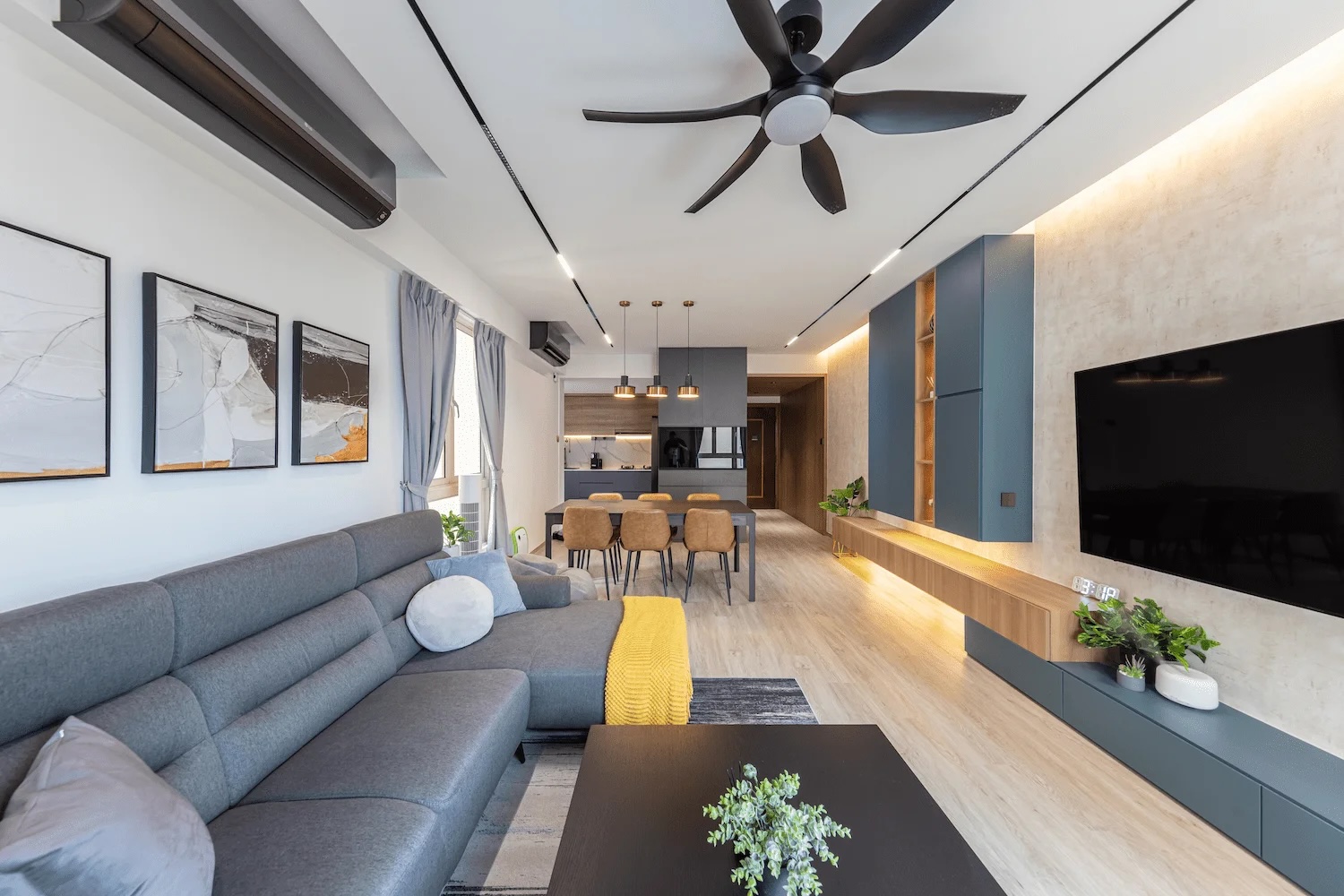
A light, controlled palette of whites, greys, and marble sets the base. Carpentry lines are clean and uncluttered, allowing textures—not colours—to do the talking. Zoning is subtle; the living and dining areas flow naturally without hard visual breaks.
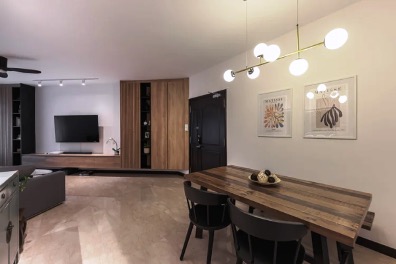
A wide shot of the living and dining area shows how airy tones, marble accents, and clean-lined carpentry create visual calm.
In the kitchen, marble surfaces and gold-accented handles are used sparingly as focal points, supported by track lighting that keeps the space crisp rather than dramatic.
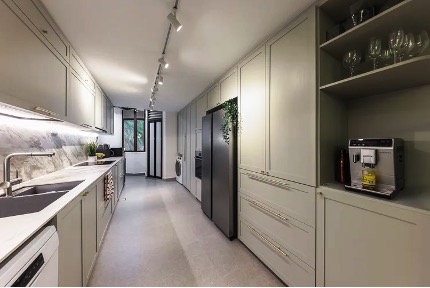
The home feels elegant but easy to live in—luxury that doesn’t demand attention.
Different style. Same philosophy! Whether you go with bold luxury or understated calm, successful homes will prioritise execution over aesthetics. Designing for how people actually live, not just how a space looks on day one.
Key Takeaways for Your Condo Journey
The real secret to a condo that works isn’t found in a trending style guide, but locked in the execution. It’s in the inches-thick drawer that holds your wok, the light switch placed exactly where your hand finds it in the dark, the clean lines that still leave room for your life to get a little messy.
The difference between a beautiful picture and a beautiful home usually isn’t style. Designer-led thinking applied consistently is what matters even in the unglamorous details. What matters most is relentless focus on your behaviour first, a ruthless pursuit of space efficiency. And a commitment to how you’ll live in these walls years from now.
Your main takeaway?
When you start looking for help, look past the surface. Look for the approach. Look for the partner who asks “how do you actually live?” before “what style do you like?” Look for someone who speaks the language of Singaporean constraints because they’ve solved these specific puzzles, in these specific buildings, time and again.
It’s what transforms that first conversation from an inquiry into a confident plan.