Interior Design Ideas Singapore: Practical Solutions for Real Homes
Remember that feeling? You’re ready to give your home a facelift, and as you start scrolling, before you know it, you’re down the rabbit hole of ideal homes, all with soaring ceilings and abundant light, that bear little resemblance to your real-life home in Singapore.
Between the ideal and your reality is a pricey divide—one where great ideas can translate to awkward design or renovation regrets. Our unique blend of compact spaces, tropical humidity, and specific renovation rules means not every trend is a practical one.
This article bridges that gap. We’ll focus on practical ideas proven in local homes to help you translate inspiration into a space that’s not just stylish, but truly livable. A good design idea will be translator. It adapts to the rhythm of your day, our humidity, and your floor plan’s realities.
What actually makes an interior design idea “good” for Singapore homes?
We see this quite often. A beautiful overseas-inspired idea that looks perfect online but feels awkward once built locally. In one recent project, a homeowner told us the design looked stunning on paper, but felt strangely uncomfortable within the first week of moving in.
Space is tighter in Singapore homes.
Many walls are structural, and you can’t always “just remove” a partition. Ventilation and humidity also change material choices, what works in a dry climate may warp or mould here. Then there are MCST and HDB rules, which quietly shape what’s realistic long before design even starts.
A good idea should pass 3 tests:
- Functionality: does it improve the flow of the home, as well as its aesthetics?
- Longevity: will it still feel good in five years, or does it feel like a relic of a bygone era?
- Feasibility: can you actually design in this market, with local regulations and price points?
We often adjust proportions, materials, or layouts during planning because copying inspiration one-to-one is where many renovations quietly go wrong. These small tweaks are what turn overseas inspiration into something that truly works here.
How can open-concept layouts make small Singapore homes feel bigger?
What “open concept” really means beyond knocking down walls
In Singapore apartments, open concept doesn’t automatically mean tearing everything down. More often, it’s about visual continuity.
Clean sightlines from the entrance to the windows, or open flooring that flows effortlessly from living to dining. And furniture that occupies the space lightly, rather than boxing it in.
Great open layouts are still well-zoned, but without heavy partitioning, so light travels further and the home simply feels easier to live in.
One real apartment where this approach transformed daily living
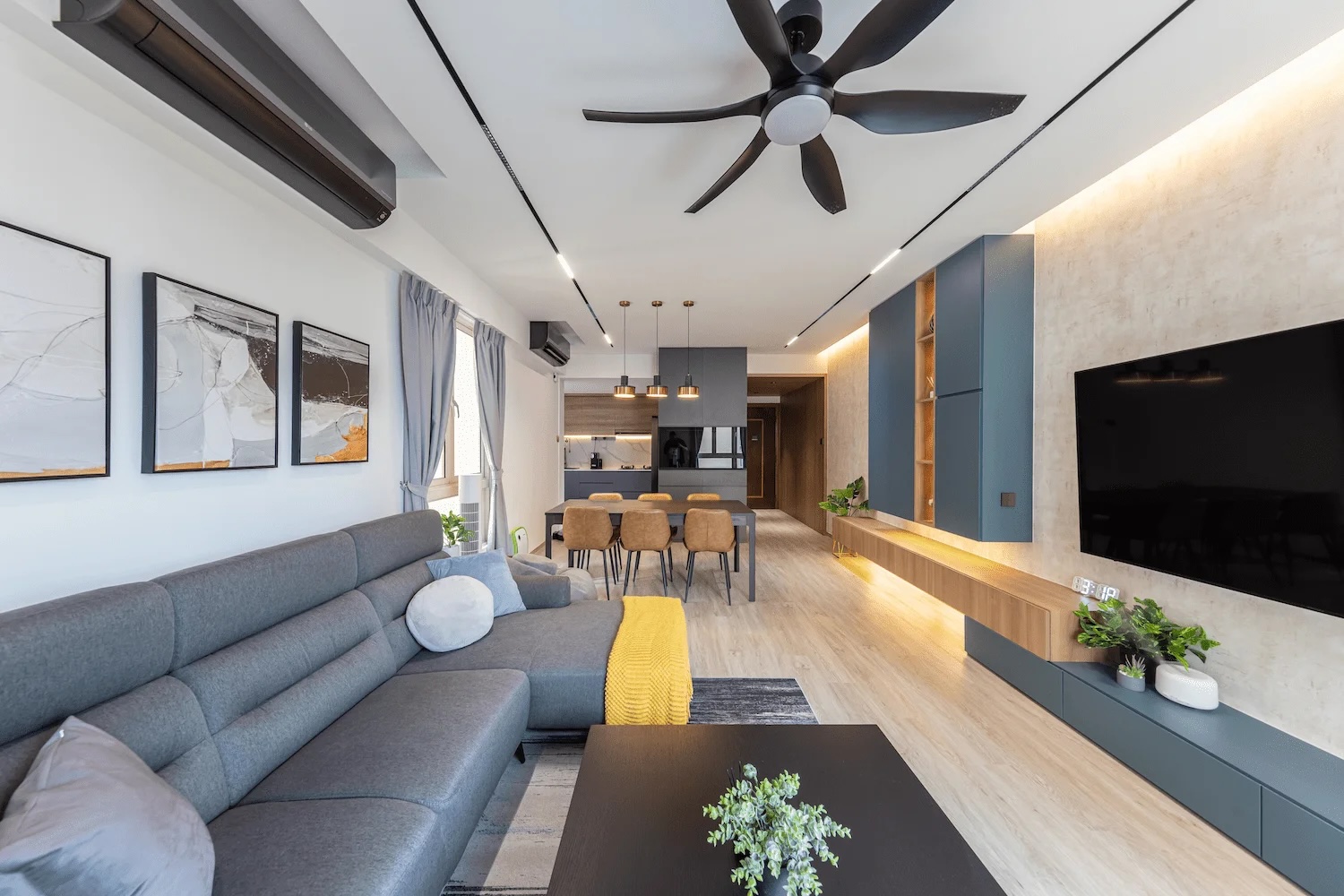
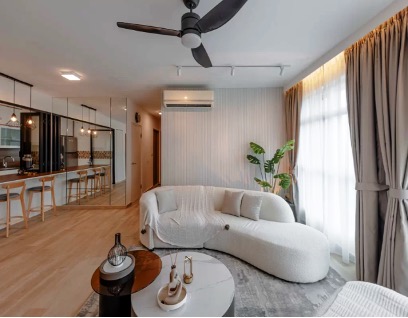
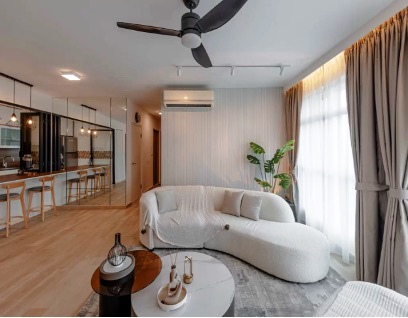
A great example of this is the image featured below.
Rather than dividing the living and dining areas, the layout was left open. The flooring is neutral and flows unbroken, and the furniture is arranged so that the whole space can be taken in at once.
During the day, the light from the windows penetrates deeper into the home. At night, the family can lounge, dine, and keep an eye on the kids without being divided into separate rooms.
Practical ways to apply this idea in your own home
- Use one consistent flooring material across living and dining
- Keep ceiling designs simple to avoid visual breaks
- Replace full walls with half-height cabinets, glass, or open shelving
Why are textured feature walls replacing flat paint in modern interiors?
Yes, feature walls are still in style, but the way they’re done has changed.
Instead of bold colours, many designers now lean toward texture. Limewash finishes, fluted panels, and stone-textured finishes warm up spaces without drawing attention to themselves. This is a more subdued, touchable, and liveable effect.
In the most considered homes of today, texture has taken over where color once dominated.
Textured walls are particularly effective in Singapore homes. They add depth without clutter. It’s helpful in homes where space is at a premium. Such walls also take light much more effectively, particularly warm layered lighting. And catch shadows and highlights, so the space feels more interesting at night.
The portfolio image below displays textured feature wall behind the TV as a serene statement piece. The wood-toned panels have subtle warmth to them that brings the living room to life without making it feel cluttered or closed in.
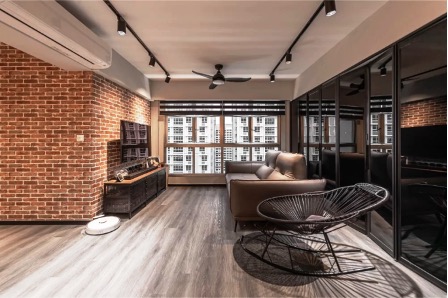
Living rooms and bedrooms are ideal. Narrow corridors or tight entryways? That’s where restraint matters. Texture works best when it has room to breathe. It’s also where we see overdesign happen most, too much texture added where the space never had room for it to begin with.
How do designers compare built-in carpentry vs loose furniture for storage?
Built-in, Loose, or a Mix? Choosing Your Storage Strategy
| What to think about | Built-in Carpentry | Loose Furniture | The Hybrid Approach (Most Common) |
| Ideal For | Homeowners settling in for the long term, or anyone needing to maximise awkward spaces like HDB bedroom alcoves or slanted ceilings. | Renters, first-time owners, or anyone who values the freedom to change their layout or style every few years. | Most Singaporean families. It delivers a custom, efficient core while leaving room for life to change. |
| Space Efficiency | Unbeatable. Custom-built to use every last centimetre, especially around structural columns, beams, or uneven walls where ready-made furniture can’t fit. | Hit-or-miss. Standard sizes rarely fit perfectly, often leaving wasted gaps. The upside? You can move things around to find the best fit. | Best of both. You get perfect-fit carpentry for priority zones (like the TV feature wall or master bedroom), complemented by flexible pieces elsewhere. |
| Flexibility & Future-Proofing | Low. It’s a permanent part of your home’s architecture. Changing it means a renovation project. | High. Swap a bookshelf for a display cabinet, or move a wardrobe to another room—all without a contractor. | Smart balance. The essential, large-scale storage is fixed and reliable, while you can easily update decor, seating, or accessories. |
| The Long-Term View | A significant investment that shapes your home’s function and feel for years. Requires you to plan carefully for future needs (e.g., more hanging space, space for a future appliance). | Easier on the budget upfront and adaptable, but may never achieve that sleek, built-in look where clutter seems to “disappear.” | Often the practical sweet spot, especially for families whose needs evolve faster than they expect. |
A hybrid approach seen in real family homes
We often recommend a mix of both.
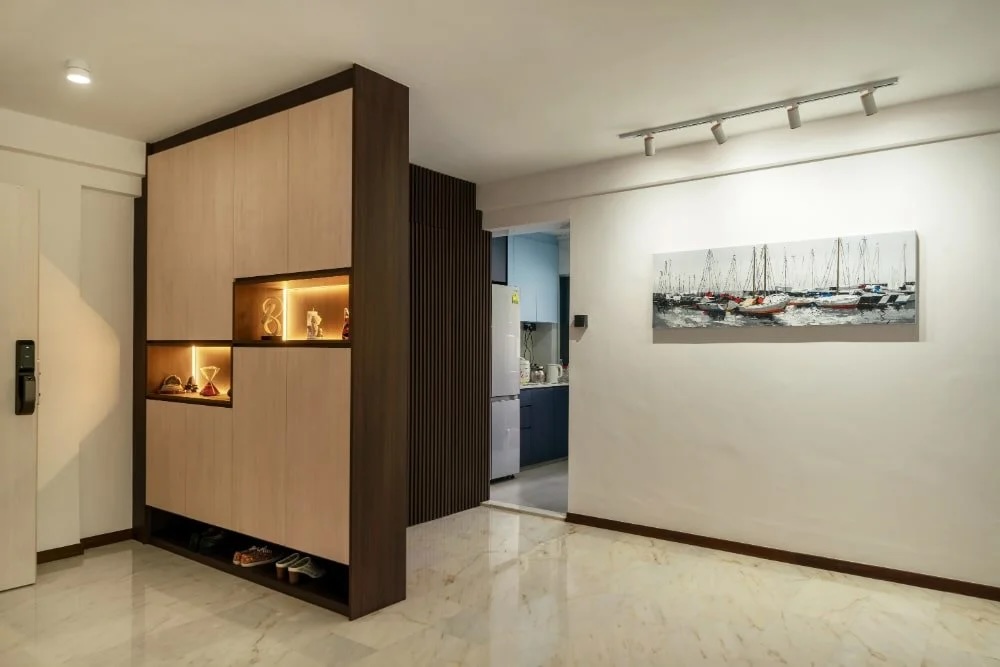
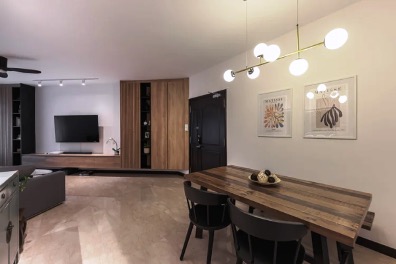
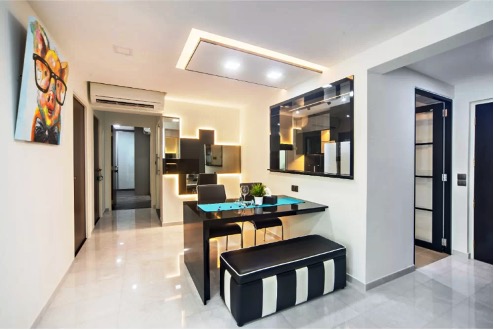
This 4-Room HDB renovation features custom storage carpentry. Permanent cabinetry can anchor the dining space, while the table and chairs are free to be moved about.
The carpentry gives the space clean, integrated storage along the wall. But the free furniture allows the space to be rearranged as needed. You get a space that feels both organized and easy to live in.
How does layered lighting change the way a home feels at night?
The final element that turns a house into a home is light.
How each space is actually used after dark?
Living rooms are for winding down, bedrooms for rest. We’ve seen homes where the same bright overhead light that works for chores feels harsh for a Tuesday night unwind. The lighting needs to reflect the ambiance of the evening.
Blend ambient, task, and accent lighting
While ambient lighting, such as ceiling track lighting or cove lighting provides the background ambiance, task lighting like reading lamps, kitchen counter lighting, or home office lighting is functional. And accent lighting provides depth by highlighting bookshelves or textures.
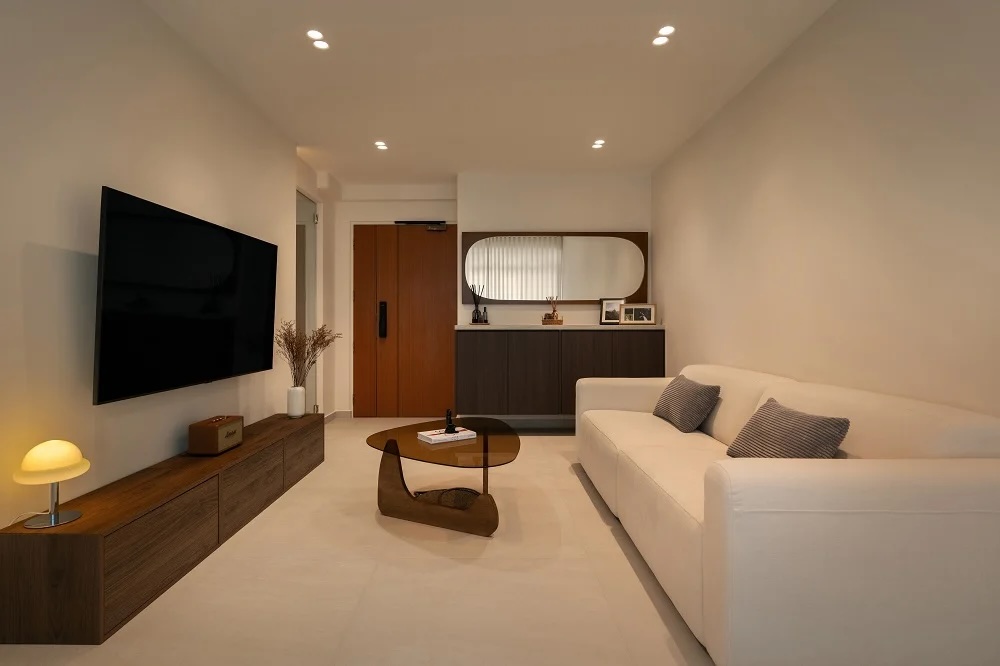
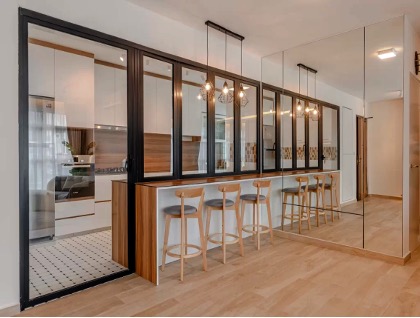
In a home renovation project where layered lighting made the greatest impact, you can see how warm track lighting, soft under-cabinet lighting, and accent lighting come together to create a soothing evening ambiance.
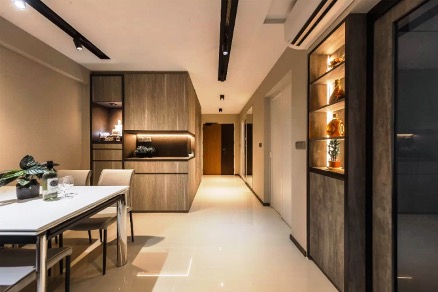
Nothing feels overly bright, yet every corner is usable. It’s one of those changes people don’t notice immediately, but they feel it every night.
Avoid common lighting mistakes seen in new renovations
A frequent mistake is relying only on downlights. Another is choosing cold, blue-toned lights that can make a living room feel like a clinic corridor after dark.
Good, functional interior design takes into account how light can soften a space after sunset, rather than just lighting it up. Lighting in a home welcomes you as soon as the sun goes down.
What interior design mistakes do homeowners regret most after renovation?
These are the patterns designers hear time and again, typically a few months after the move:
- Designing for photos instead of daily habits: Oversized kitchen islands that block movement. Display shelves that look great online but collect dust because they’re hard to maintain.
- Ignoring storage planning early: When storage isn’t planned upfront, ad-hoc cabinets get added later. The result is visual clutter and a home that never quite feels settled.
- Skipping professional space planning to “save cost”: This often becomes a false economy. We’ve seen interior design ideas that looked cheaper on paper, but required costly rework once daily routines exposed the flaws.
If you can’t tell how you’ll use a particular design element every day, it shouldn’t be in your home.
Key Takeaways: From Inspiration to Your Home
The projects above prove that thoughtful planning can turn constraints into your home’s best features.
Take a moment before you commit. Look at your space again, not just on a screen, but while imagining an ordinary weekday evening at home.
Where does the light fall?
Where does clutter accumulate?
And remember that most inspirations rely on precise execution.
If your vision includes a rethinking of layouts or custom details, collaboration with experienced professionals can take a good idea and make it a great home. Their expertise is in the process of taking an idea and turning it into something that truly and wonderfully is yours.