What Really Sets the Top Interior Designers in Singapore Apart
It is relatively easy to find interior designers in Singapore to renovate your home. It is not easy to tell which are the better ones.
Many interior design companies and studios can design a great and creative home. But whether they can deliver on their promises is another matter.
So what really sets the better interior designers apart from the rest? How do they think before they design a space? They consider the habits of the people who live there and work within the constraints of Singapore homes and the rules governing renovation. The difficult parts of a design are revealed early in the process: the cost, the sequence of the work, the workmanship, and what can and cannot be changed along the way.
The tests below are a way to check an interior design company’s thought process and assess their work. The best way to do that is to meet with them, review their portfolio, and compare their quotes.
They start with how the household actually lives
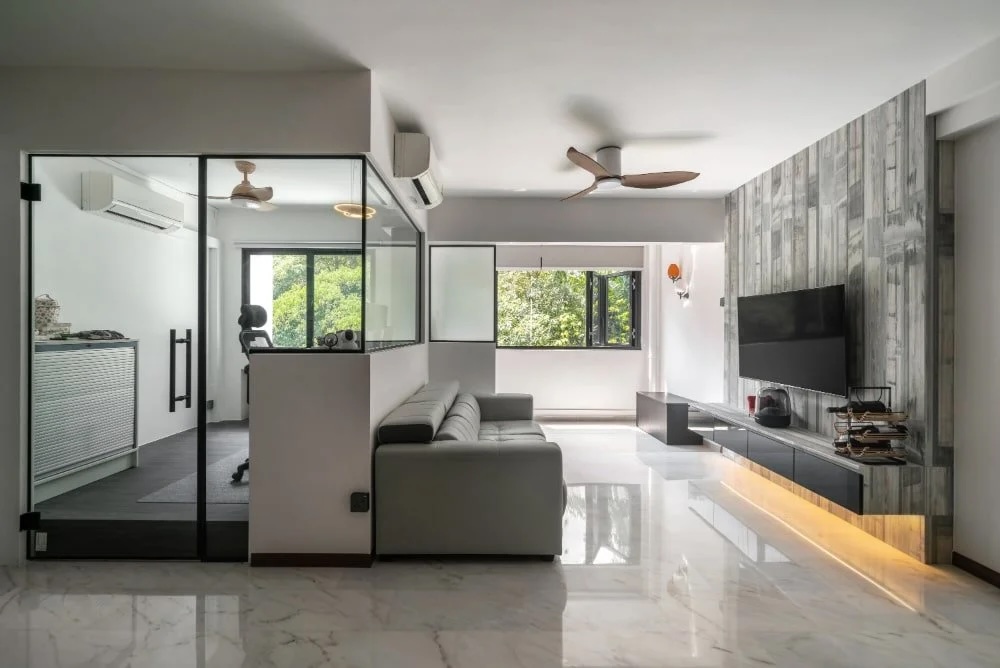
A poor first meeting will often plunge straight into the ‘look’ of a potential interior (e.g. Japandi, “warm luxury”, a moodboard with images of hero spaces). These are not without value, but they come far too early in the process of figuring out a Singapore home and its occupants’ behaviour.
A good designer can summarise your morning and evening in the home within the first hour. They will ask who cooks, where bags and boxes land, and whether anyone works at the dining table — then design a floor plan around that weekday.
Test: What do they ask before they present work? Could they describe your morning and evening in the home?
They solve Singapore constraints first
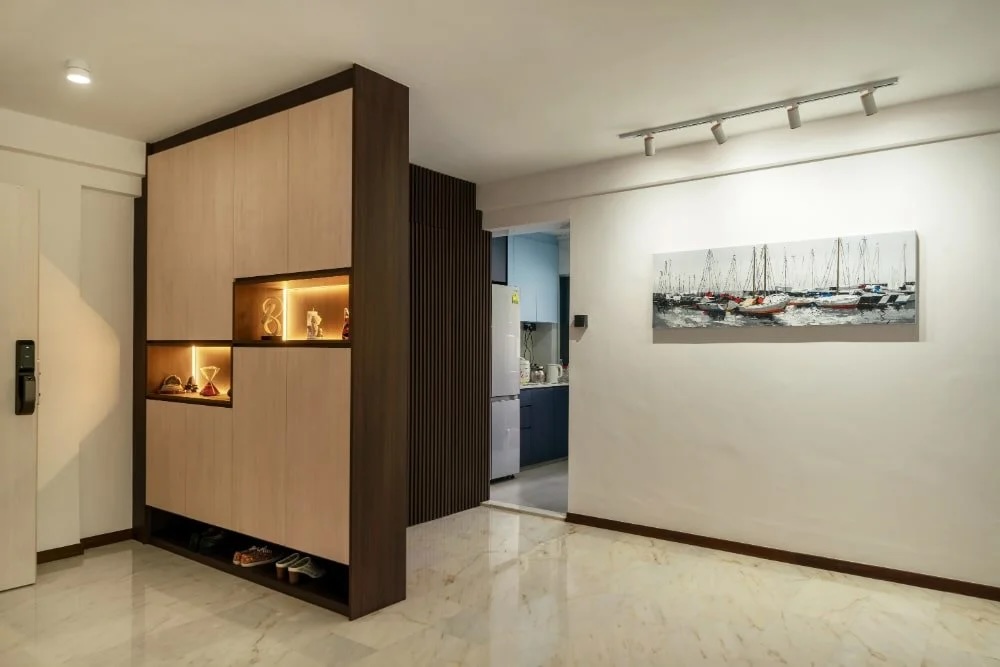
Often, designers want to achieve a certain look by fitting the space to it. In other words, they create a sofa wall, an island, and a feature panel, then try to make the room work around them. Better space planning starts with what cannot be moved: the structural walls, beams, windows, and so on.
The fixed constraints in a home are the structural walls and beams, the window positions and air-con ledges, the service yard, and where wet works are allowed. For a typical Singapore home, the designer needs to take these into account. In an HDB flat, you must also consider the wall hacking guidelines.
A good designer would point out the awkward beam in the first meeting and then show you how the corridor would work in a rendering. They would also list the constraints in the first layout discussion and then design around them. In some cases, they would even tell you that the island, walk-in closet or open kitchen you want would cost you square feet in the home.
Test: Ask the designer about the things that cannot change in the unit they are going to design for you — structure, services, rules. They should explain how they have incorporated these into the design. If not, they have not planned your home. They have only decorated a floor plan.
Their process makes the risk visible early
A top interior designer has a solid process for handling the complexity of a renovation project.
This includes a description of what you are approving at each stage, what that is costing (as an estimate), the designer’s limitations, possible problems, lead times, HDB/MCST approvals, possible variation orders (e.g. a special feature wall or kitchen island), and other aspects of the renovation process that they manage.
A stronger process should be in writing, with several points, more detailed and clearer about the ins and outs. It should clearly describe each stage of the process, for example, who will sign off on any changes and when the final quotation will be available.
One would expect that honest communication during the design and renovation process is important for building a good working relationship and avoiding misunderstandings later on.
Test: Walk the designer through their process from start to finish, showing where you as the client approve the layout, the materials, and finally the quotation. If by the end they cannot explain what usually results in extras being incurred, then their process does not protect you.
They can show workmanship, not just styling
Even the best design does not matter unless it is executed well. That’s why you should focus on the workmanship details across all finishes, including carpentry, doors, joinery, ceilings, and special items such as storage and lighting. All of these are very subtle, easily noticeable details once you complete the renovation.
The devil is in the details and the same applies to HDB and condo interior designs. For example, poorly fitting doors and insufficiently finished joints in laminate flooring can be a real problem in a kitchen. Well-finished carpentry and ceiling lines are also details that will affect you daily. Furthermore, poor lighting can look great but can be completely unusable in reality. This is why the details are so important, and why collaboration with skilled craftsmen and quality contractors is key to delivering a great design.
Renovations in Singapore are costly, and because of the high humidity and constant cooking in the kitchen, materials can wear out quickly. The design and layout have to last and be practical for the homeowner, even as their tastes change over time.
Test: For the pictures in the portfolio, ignore the large pictures and take a closer look at the corners, joinery edges, ceilings, and the backs of the shelves and cabinets. Ask for the specifications for wet areas in completed bathrooms and kitchens, and for a description of the site visits to verify the quality of the finished work.
They change approach by home type
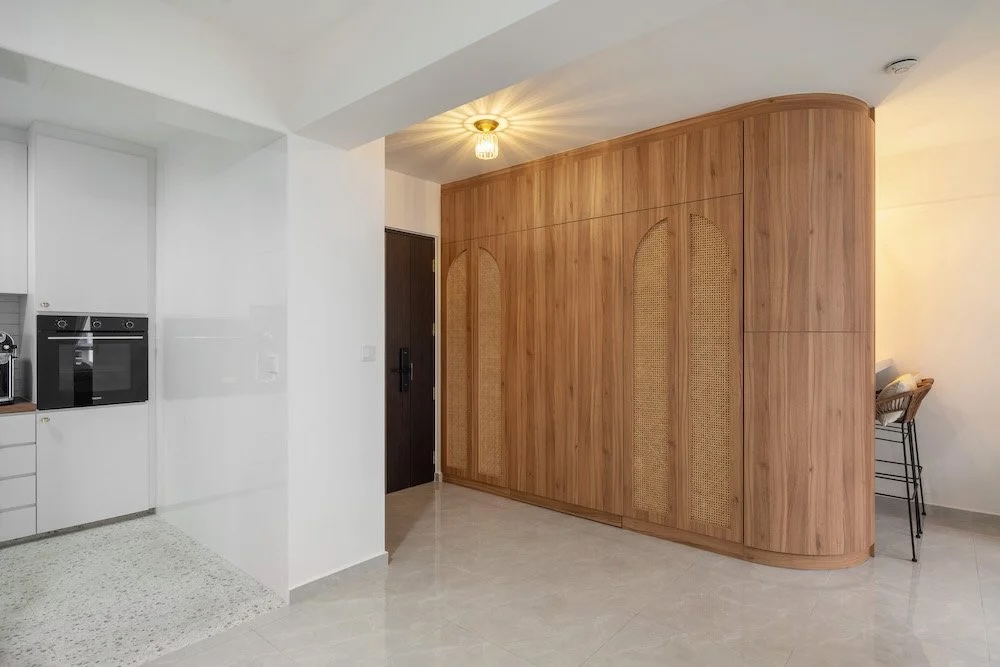
For a start, Singapore is a very diverse country. We have a large variety of different houses. These include HDB flats, condominiums and landed houses. All of these different types of houses require a designer to adjust their approach for each.
For HDB work, the designer would need to know the building regulations as well as the constraints of the individual space. Typically, a designer would ‘hack’ a room or two in order to create space for their ‘designer’s touch’. Wet work would typically be restricted to certain areas of the home. The designer would also need to have knowledge of the unique challenges of a 3-, 4-, or 5-room home and how best to utilise the space in each. BTOs and resale homes would typically require a different approach too. These limits are set out in the official HDB renovation guidelines.
In practice, better designers change their style of renovation for different types of homes, for example HDB (BTO and resale), condos and landed properties, tackling the problems in these different homes in different ways. They are more practical.
Test: Ask for examples of previous completed renovations of similar homes. See how they worked around different constraints to achieve a good result. A versatile designer would have different designs for a resale HDB, a BTO of similar size, a condo of similar size, and a landed home. A designer who is not versatile would have the same feature wall and the same kitchen island for all of these.
Their portfolio still works when you ignore the hero image
When evaluating interior designers in Singapore, several portfolios offer more reliable insight than marketing claims. Do not stop at the highlight images. Look for consistency, depth, practicality, and realism across completed projects.
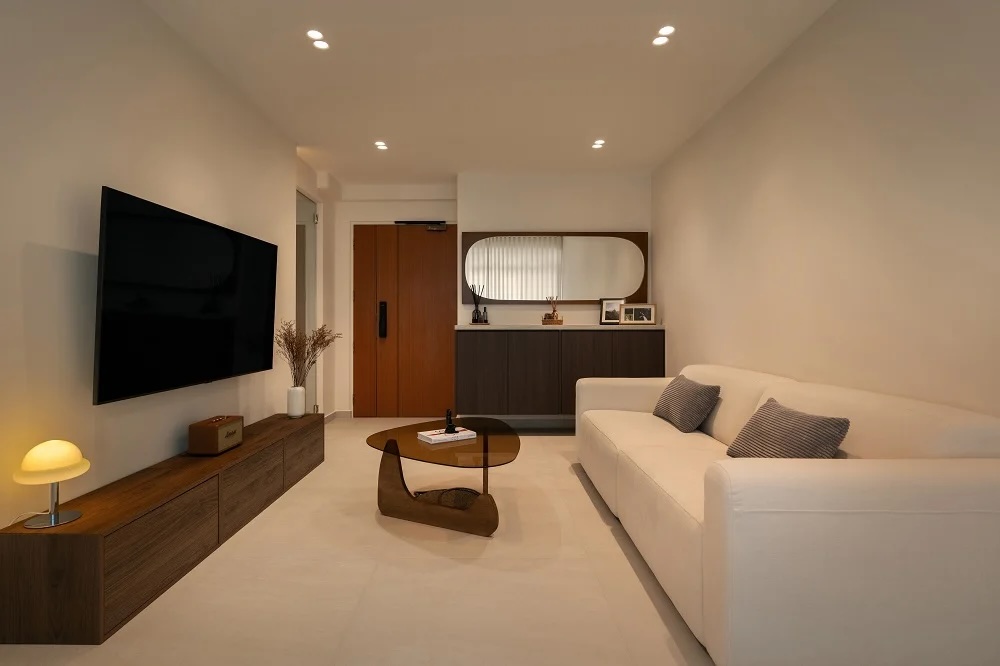
A strong portfolio shows how a designer adapts to different client needs rather than repeating the same style. It also shows how the choices hold up in real rooms, not only in staged photos. You can review interior design portfolios in Singapore that show completed residential projects. Use them the same way you would use any other studio’s work: as evidence of everyday spaces, not as a shortlist on their own.
A weaker portfolio consists of wide shots. A more useful one still looks considered in kitchens, yards, bathrooms, corridors, and storage.
Test: Open three non-hero rooms. Do they still look liveable? Can you tell what the home type is, and whether the layout would work on a weekday? If not, the marketing is doing more work than the design.
They communicate in a way that protects time and money
Choosing a designer you can communicate with comfortably usually means a better process, and a home that is easier to live with. Beyond design skill, communication has a large effect on whether the renovation stays on track.
Designers who reply promptly, explain decisions clearly, and manage expectations reduce stress through the project. Homeowners often underestimate this until something slips — a lead time, a site issue, a budget change. Clear communication makes it easier to resolve problems, adjust plans, and keep trust when timelines or costs move.
Stronger designers treat the role as both creative and managerial. They tell you who your point of contact is, how updates arrive, and how variations are approved in writing. A weaker pattern is friendly in the first meeting, then slow or vague once work starts.
Test: After the meeting, you should know who replies, how often you get updates, and how extras are signed off. If that is still fuzzy, communication will not protect the timeline or the budget.
How to use this when you shortlist
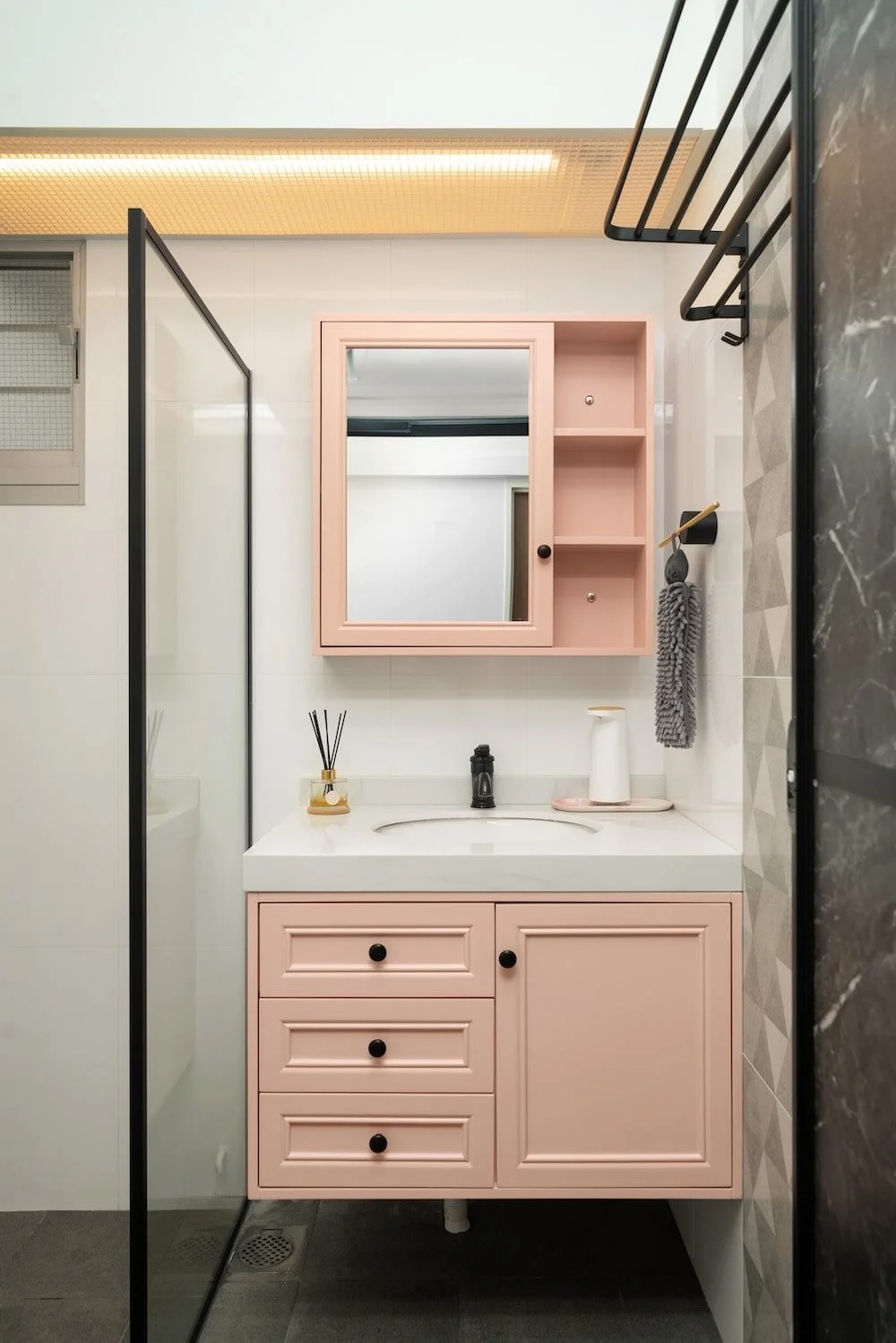
There is no single “best” interior designer for everyone. The right choice depends on how well a designer’s approach fits your priorities, lifestyle, and budget.
Before you commit, assess more than the look: how they communicate, how they handle feedback, and how they solve problems. A strong working relationship often leads to a better outcome than choosing purely from visuals.
Use the sections above as a short shortlist, not as a ranking.
Questions to ask in the first meeting:
- Can they describe a weekday in your home before they talk style?
- What cannot be changed in this unit, and how does that shape the layout?
- What do you approve at each stage, and what usually causes extras?
- Do they have completed work in your home type, and what was difficult about it?
- Who is the point of contact, and how are variations approved?
In the portfolio, check:
- Three rooms that are not hero shots: kitchen, bathroom or yard, and storage
- Consistency across projects, not one repeated look
- Workmanship in corners, joinery, and ceilings
In the quotation, check:
- What is included and excluded
- How site issues and changes are priced
- Whether the process is written down, not only explained verbally
If those answers are clear, you are closer to a designer who can carry the project. If they are not, the photos are doing too much of the work.
FAQs
What should I look for when choosing an interior designer in Singapore?
Look beyond aesthetics. See how well they understand your lifestyle, plan the space, communicate, and manage the renovation from start to finish. The first meeting, the portfolio, and the quotation should all show that — not only the style frames.
Why is space planning so important in Singapore homes?
Floor areas are limited, especially in HDB flats. Good planning gives you clear movement, a layout that works, and enough storage without making the home feel cramped. Poor space planning is difficult to fix later, no matter how good the finishes are.
How can I tell if an interior designer is experienced?
Review the portfolio carefully. Consistency across home types, practical layouts, and completed real projects is more reliable than marketing claims. Ask for work in your property type and for the constraints.
Do stronger designers follow a specific renovation process?
Yes. Reputable designers use a clear process: layout planning, 3D visualisation, technical drawings, material selection, and transparent communication at each stage. You should know what you are approving and what usually causes extras.
Is communication really that important during renovation?
Yes. Clear, timely communication helps manage expectations, resolve issues, and reduce stress when timelines or budgets shift. After the first meeting, you should know who replies and how changes are approved.