How to Get First Aid Certification in Singapore (Step-by-Step Guide 2026)
Most people only think about first aid certification when they are required to get it.
For work. For compliance. Or during a job application. This guide walks you through exactly how to get first aid certification in Singapore, including course types, costs, requirements, and how to choose the right provider.
What First Aid Certification Actually Means
First aid certification is official proof that you’ve completed a recognised training course that prepares you to respond to medical emergencies before professional help arrives.
In Singapore, most recognised courses follow workplace safety standards aligned with Ministry of Manpower (MOM) guidelines and are often supported by frameworks from organisations like the Singapore Resuscitation and First Aid Council (SRFAC).
Training typically covers:
- CPR (Cardiopulmonary Resuscitation)
- AED (Automated External Defibrillator) usage
- Wound and bleeding management
- Fractures and injury handling
- Choking and unconscious casualty response
The aim isn’t to turn you into a medical professional. It’s to help you stay calm and take the right action during critical moments.
How to Get A First Aid Certificate in Singapore?
Step 1: Choose the Right First Aid Course
Not all first aid courses in Singapore are the same. The right one depends on your purpose. Some of the most common types of first aid certificates include:
- Basic First Aid – General public (1–2 days)
- CPR + AED Certification – Office roles (1 day)
- Occupational First Aid – Workplace roles (2–3 days)
- Refresher Courses – Renewal (1 day)
If your employer requires certification, they will usually specify the exact course (often Occupational First Aid).
Step 2: Enrol with an Accredited Training Provider
This is where many people make mistakes. Not all training providers issue certifications recognised for workplace compliance.
In Singapore, we always recommend people to choose a provider that:
- Follows the MOM workplace safety standards
- Offers courses aligned with SRFAC guidelines
- Provides hands-on practical training
A structured provider offers recognised first aid certification courses suitable for both individuals and companies.
Step 3: Attend the Training (Theory + Practical)
First aid training is relatively short, but it’s not something you can just sit through passively. Most courses are split into two parts:
Theory sessions, where you learn how to assess situations, understand emergency response steps, and apply safety principles.
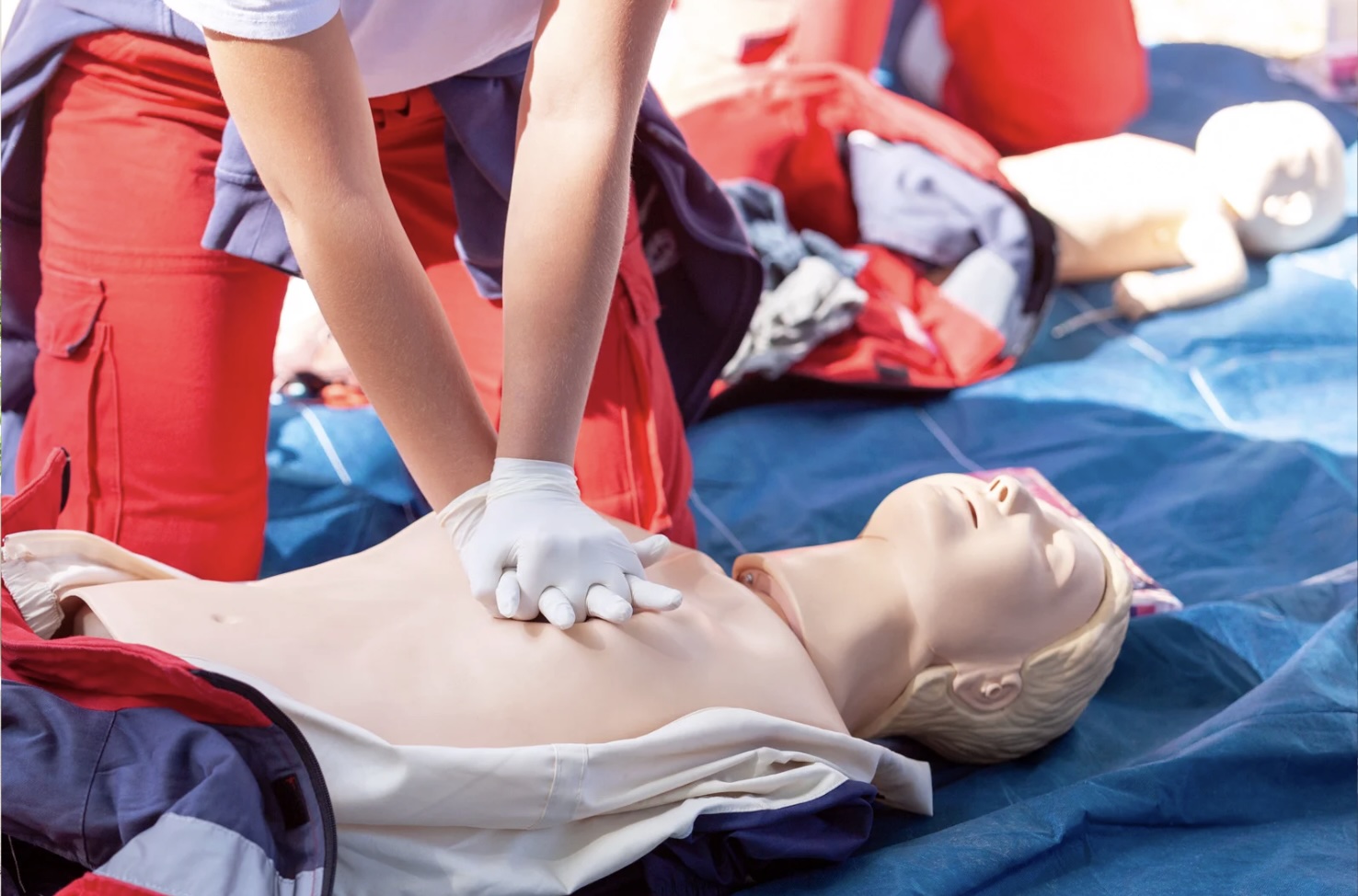
Practical training, where you practise skills like CPR, using an AED, and responding to simulated emergency scenarios.
Knowing the steps in theory is helpful, but applying them under pressure is what the training is really designed for.
Step 4: Take the Assessment
At the end of the course, you’ll need to pass a written test (basic understanding) and a practical assessment (CPR, AED, emergency response).
You don’t need medical knowledge, just proper attention during training. We have observed that most participants pass on their first attempt.
Step 5: Receive Your Certification
Once you pass, you’ll receive your first aid certificate. It is important to note that:
- Validity is usually 2 years (varies by course)
- Renewal requires a refresher course
- Recognised certificates can be used for:
- Workplace compliance
- Job applications
- Safety roles
How Long Does It Take?
Most first aid courses in Singapore take 1 day for CPR & AED certification. Whereas, occupational first aid takes 2-3 days to complete. Compared to other professional certifications, it’s relatively quick and accessible.
How Much Does First Aid Certification Cost in Singapore?
Costs vary depending on course type and provider.
Typical Price Range:
- CPR + AED: SGD 80 – 150
- Basic First Aid: SGD 150 – 250
- Occupational First Aid: SGD 200 – 400
Many companies in Singapore fully sponsor first aid training for employees if it’s required.
Common Mistakes to Avoid
Even though the process is simple, we have seen people often make avoidable mistakes:
- Waiting Until the Last Minute: Courses fill up quickly, especially for workplace-required certifications.
- Choosing Non-Accredited Providers: This can result in certificates that are not accepted by employers or regulators.
- Not Taking Practical Training Seriously: Assessments are based on real execution, not just theory.
- Picking the Wrong Course Type: A CPR-only course may not meet workplace requirements.
Is First Aid Certification Mandatory in Singapore?
It depends on your role. Generally, people in low safety risk jobs do not need a first aid certificate. However, for certain industries like construction, marine, and manufacturing, it is required to get first aid certification under workplace safety regulations.
In practice, many companies only realise the importance of certified first aiders during safety audits or inspections. But, employers must comply with MOM Workplace Safety and Health (WSH) requirements, which may include having certified first aiders on-site.
Why First Aid Certification Is Worth It?
Even if your job doesn’t demand it, the benefits are real. Someone who is certified in first aid has increased employability rates, better workplace safety awareness and more confidence during emergencies.
They are also able to assist family, colleagues, or the public in cases of emergency.
Final Thoughts
Getting first aid certification in Singapore isn’t complicated. Once you choose the right course and a recognised provider, the process is fast, structured, and practical. But the real value isn’t the certificate. It’s the ability to stay calm, act quickly, and potentially save a life when it matters most. And that’s something no qualification alone can replace.
FAQs
Can I take first aid certification online?
No. While some theory components may be online, practical training and assessment must be done in person.
How long is first aid certification valid?
Most certifications are valid for 2 years, after which a refresher course is required.
What is the easiest first aid course to take?
CPR + AED certification is the quickest and most beginner-friendly option.
Do I need first aid certification for office jobs?
Not always, but some companies require it as part of workplace safety compliance.
Which first aid course is best for workplaces?
The Occupational First Aid Course is typically required for workplace environments.